Sunday, December 7, 2008

Monday, December 1, 2008

Sunday, November 30, 2008
lucky

must have been my lucky day...lindsey actually let me take a couple of shots of her...she doesn't like to model for me...and yet, she remains my favorite model! pics @ flickr
Thursday, November 27, 2008
kenyon max

Monday, November 24, 2008
Friday, November 21, 2008
carnival processed set

i finally got some shots @ the little carnival that sets up down the street from work every few months. i shot these around 6:40am while exiting I-30 @ Buckner blvd. i'll add them to my "The Road Home" series, which shows various points on my daily commute between midlothian and east dallas (as well as a few longer 'homeward drives'). all shots in the series are shot while driving (please don't tell my boss, since I am our company's risk manager). you can find the series: here.
Monday, November 17, 2008
true confession #20
hissin family portraits

finishing up portraits for some friends...I'll post a couple more, but the rest can be seen @ flickr.
Saturday, November 1, 2008
true confession #19
Tuesday, October 21, 2008
Monday, October 6, 2008
true confession #17
Wednesday, September 17, 2008
Monday, July 7, 2008

Monday, June 23, 2008
Wednesday, June 18, 2008
Tuesday, June 17, 2008
wish i was there...

i just got back to work after 7 days spent beachside and poolside in hawaii. i wish i was there again...pictures posted slowly @ flickr
Friday, June 6, 2008

Thursday, June 5, 2008
true confession #13

Wednesday, June 4, 2008
Tuesday, June 3, 2008
TMI: emerging adulthood
Men are but children of a larger growth, Our appetites as apt to change as theirs, And full as craving too, and full as vain. -John Dryden
One of the signs of passing youth is the birth of a sense of fellowship with other human beings as we take our place among them. -Virginia Woolf
Finding Me
As I entered college, I felt as though I was finally getting somewhere. I was building a great relationship with my parents and brother, I was on my own(ish), working for a church, following my dreams, seriously dating a girl that I had grown up with (who later became my wife), and I spent most of my weekends traveling to lead camps and retreats. During my freshman year, I absolutely loved college life, though I didn’t particularly care much for the classes. Unfortunately, classes count for a lot at college. I was virtually stress-free during that year…until I received notice that my GPA was an outstanding 1.7 (yikes!). For so much of my life, I had coasted, trusting in my natural abilities to get me through. I had never really learned how to study, and I had no real philosophy of learning. Though I still relied heavily on experiential learning, I began to see the value of quantitative education. I learned how to work hard in, and out, of the classroom, how to pass, and how to achieve.
I joined the intern staff at Pioneer Drive Baptist Church (a large church in Abilene, TX) the same week as classes started for my freshman year at Hardin-Simmons University. Here, I found great chemistry with a student ministry team that valued relevance, authenticity, and creativity. We became like family, and looked for every opportunity to serve and grow together. Looking back, I feel that this time was, more than anything, my first great learning curve. We concentrated on values and ideals, on developing leadership and teamwork, and on raising the levels of expectation on ourselves and those we were discipling. This would mark the first earthquake in my attempt to be The Natural. I started recognizing my strengths and my weaknesses, and I trusted learning, hard work, faith, and teamwork to achieve. Under God’s leadership, as a team, we ventured out to plant a new church in our college town. Though I have moved and had other ministry experiences since then, I still consider this team as a major instrument through which God has shaped my ministry. Through the experiences of church planting and working in local churches, God has restructured my church theology. Whereas, I once saw the institution of the church, as the center for ministry and evangelism, I better understand that God expects of all of His [sent] people to participate in His mission. I see enabling and empowering believers, as members of churches to do the work of ministry and evangelism as my part in God’s mission. I hope that through my ministry, people will understand and meet their full potential in relationship with God.
The most significant event in my college experience was marrying my wife, Lindsey. We had grown up together (we were from the same church, and she was in my close circle of friends), and she knew me better than most. She was well aware that she was committing to an idealistic, arrogant man, and she knew that I strived to be a better man. Mostly, she knew that I loved her wholly and unconditionally…and she returned that love. We dated for two-years before I begged her to be my wife, and we were married one year later, after our junior year of college. Though she was well organized and reserved while I was scattered and assertive, we fit together well in our 500 square-foot apartment. The memories of bills and grades seem distant to the joy of discovery and excitement that defined our first year of marriage. She took classes and student-taught at a local elementary school; and I took classes, worked on staff at our church start, and held a part-time job at an office supply store. We were busy, but we were blissful. We now joke that we had to, at least, get-along with each other, since our tiny apartment left no room for us to fight.
I’m now 26 years-old, and I truly believe that these several years since college have marked my second great learning curve. It has also been the time in which I have developed the most on cognitive and socioemotional levels since infancy. I have finally found the adulthood that I craved since I was a child. My sense of awareness has been shocked and has grown in regards to our global community. My sense of idealism and my values are maturing and revealing my priorities. I am truly learning of the depths of love and of Christian submission. Mostly, I have been humbled, again and again. This process of learning humility is sometimes difficult and painful; but I am learning that the less I become, the more God is revealed; and the more I learn, the more I realize I have even more yet to learn. God is teaching me the values of, and the joys of patience, intimacy, and interdependence. Though I always wanted to be The Natural, it is now my wish to be the student. It is my hope that God will take the rest of my life and continues to reveal to me, His nature and His ways, and that I will conform to His image. My personality, my physical build, my way of reasoning is all meant to be used in His service.
A Shared Adulthood
Lindsey and I have spent the past year as the primary caregivers for her elderly grandparents. Through this experience, I have seen 91-year-old Pete, and 89-year-old Gladys love one another and care for one another. Until the past couple of years, Pete, could have full conversations with us, often sharing war stories from WWII. He had okay balance and could move pretty well when using his walker. During that time Gladys (who I’m told has always been a perennial hypochondriac) was in-and-out of the hospital (though nothing much was ever wrong) and had grown accustomed to being pushed around in a wheel-chair. Pete went really downhill physically and mentally over the last two years. He had dementia, and was losing weight and strength. As his health was failing, Gladys began worrying less about her “illnesses” and more about taking care of him. She would get him out of bed in the mornings, and dress him in slacks and a dress shirt (he always liked to look good), and herd him down the hall to breakfast. At meals, she had to goad him to eat and drink, and afterwards, tell him to wipe his face. Though she did not like to have the television sound turned on (because it bothered her hearing due to her hearing aids) she would turn up the volume or turn on music for him to listen to help stimulate his mind and senses. Though Gladys never seemed to display affection, in Pete’s lasts few months, we often saw her hold Pete’s hand, stroke his white hair, and place tender kisses on his cheeks and lips. Lindsey’s Grandpa Pete passed away a couple of weeks ago. Gladys has cried and mourned, but she has also grown to be strong. When her husband was in need, Gladys changed her outlook on life in such a way that it affected her physical and emotional being so that she could take care of him. Today, she is a stronger, healthier woman than she was 2 years ago. When we go out, she doesn’t take her walker with us. She shows love and concern for Lindsey and I, and she has more social activity (particularly bingo with her friends) than she has had in many years. From one perspective, I see that Gladys changed her way of life to help save her husband, in his last years, from losing dignity and quality of life. From another perspective, I wonder if somehow, Pete, who was a very intelligent and caring man, found a way to save her.
Lindsey and I are only 26-years-old. In our five-years of marriage we’ve experienced several losses and heartaches, we’ve miscommunicated and disagreed, we’ve been poor (beans for dinner 3-days a week poor), and we’ve made mistakes; but we’ve survived. We have grown, loved, cherished, supported, embraced, encouraged, and celebrated each other. We have a wonderful, beautiful marriage that is becoming like the image of unity expressed by the Trinity. Engraved inside my wedding ring are the words “love endures all”. Through having children of our own, and watching them grow and develop, through our own physical and emotional changes, and as we experience mid-life crisis’ and the chaos that generally is life, I expect that our love will endure all. And though with old age, we may break down physically and mentally, it is these love relationships that God gives to us with a spouse, or with intimate friends or family members, that He uses to save our quality of life. I hope that I outlive Lindsey, so that I can always take care of her; but if I do not, I know that she will stick with me through it all.
Monday, June 2, 2008
TMI: adolescence
There is nothing wrong with today's teenager that twenty years won't cure.
-Author Unknown
Preadolescence and Early Adolescence
My voice had deepened early, but my height and weight of the 6th – 8th grades led me to have a small guy’s aggressive mentality. I entered Jr. High School as a strapping 5-foot 1-inch, 100-pound display of adolescent manhood. I felt as though I always needed to prove myself, and to show off any skill that I could muster to compensate for my lack of size. I became aggressive and defensive in sports and in friendships. Sometime during 6th grade, I had become very social; I was “a social butterfly” as my mom liked to call it. And within my social circles, I always wanted to be the leader, and I led by my inflated ego. My parents like to call 7th grade “the rebellious year”. During this time, my dad’s job was requiring him to travel some, and my mom “just didn’t understand” what it was like to be a 12-year-old boy. I desperately needed to discover who I was, but I was trying hard to create my image to be someone I wasn’t. Fortunately, I saw fit to seek the counsel of “older, wiser” guys who might help me. Unfortunately, these “older, wiser” guys were actually just 8th graders who were going through their own rebellions. We experimented at pushing the limits on what we could get away with, and we partied and behaved as though we were much older than we were. By these risk-taking behaviors, we were seeking experiences that would create high intensity feelings. Adolescents like intensity, excitement, and arousal. As most young teenage boys, we were driven by our hormones; and with that combined with my inherent need to prove myself, I became very chauvinistic with the girls in my social circle. In all our efforts we had a strong appetite for novelty and thrills.
I needed to improve my decision making, and I needed to develop an accurate self-understanding. During the summer after my 7th grade year, by my parent’s insistence, I spent a lot of time with the youth group from my church. The openness and genuine care that they expressed was in stark contrast to the highly competitive, highly judgmental group that I ran around with at school. I experienced a major defining moment that June during a summer church camp held at Howard Payne University. It was an accumulation of events and the environment that God used to gain my attention; but specifically I remember a conversation I had with my youth minister, Dennis Perry, and his friend, Chris Rice that helped me reach a point of turning towards Christ’s ways. Essentially they challenged me in a way that I needed to be challenged. They cast a vision for me to learn to lead others by Christian submission. This made sense to me as it incorporated who I was with the community I was learning to love.
When I returned to school for my 8th grade year, I brought with me a new direction and new sense of who I was. Of course, I had not anticipated the awkwardness of the transition I had yet to experience. While I had traveled a distance spiritually, the social group I rejoined had not shared in my journey. My relationships with school-friends suffered, and I did not feel that I had a best-friend or confidant. Throughout the year I rediscovered both a sense of independence from my school-friends and a sense of isolation and loneliness. During this separation from my “rebellious year” I began to spend more time with God, learning to know Him and trust His direction. In this way, for the first time, I began to truly discover who I was, and where I was going. These changes in my attitude and way-of-thought, along with several physical changes (finally starting to catch up in-way of height and weight), began to build in me a healthier self-concept.
Socioemotional Development of Teenage Years
In High School, I skipped the top-dog phenomenon all-together. I was comfortable in who I was trying to be, and was building healthy friendships with freshmen through seniors. For me, reaching High School was like reaching the summit of a large mountain that I had been climbing towards adulthood. I was still in many ways a child, but I was finally earning freedoms and trust that allowed me to “stretch my wings” and mature. Of course at the time, I was still yearning to reach ahead into the next stages of maturity. As much as I loved reaching high school, at times, I considered it a necessary evil that had to be finished so that I could be in college. (Of course later, I thought college was only a necessary evil so that I could be free from restrictions and everyone else’s expectations.)
As a teen, I believed I was invincible. According to David Elkind’s work, I was simply reaching a very normal stage of adolescent egocentrism, called personal fable, in which a teenager has a strong illogical sense of personal uniqueness. I felt that almost no one could really understand how felt or how I thought. I considered myself a deep and mature thinker, and an athletic Olympian; and I believed that nothing could stop me. My best friend in High School, Steele (who was a year older than me), fueled that fire with his similar approach to life. Together we could accomplish more significant works (and more silly mischief) than either of us could on our own, and so we joined forces in all of our activities.
DeSoto High School held much diversity within its student body. Ethnically, the school was built with approximately 30% Caucasian students, 60% African-American students, and 10% Latino and Asian students. Very poor families and very rich families were represented, and the school offered a wide variety of curricular and extra-curricular activities for students to participate in. With our combined efforts, Steele and I brought about victory and caused disaster in school sports, in theatre, in the cafeteria, as library aids, in the halls, and in any course that we could manage to take together. We tended to buck authority when we could get away with it, and each of us was determined to do things our way and be successful. For me, I suppose that this was an extension of my early longing to be The Natural. We considered ourselves a dynamic duo socially, and creatively; and spiritually, we made every effort to hold each other accountable to our Christian values and we attempted (often with failure) to humble each other.
Through the relationships I experienced within my family and with my church family, and through the activities that inspired my self-concept, God gained control of my heart, and he turned my motivations towards Him. I wanted to please Him and to serve with all of my strength. At the age of 16, I felt a sure and strong calling to ministry. I instantly determined to try to be a peace bringer where there was no peace, leader where people needed leading, and a servant to others for God. I aggressively began chasing this life-direction in every way I could. I took a job as a janitor for my local church, I played guitar on the youth praise team, played bass for a college worship band that led in area youth retreats, created videos for my youth minister to use in worship services, and participated in community evangelism efforts. I was eager to learn by serving and experiencing ministry. I think in many ways, this centered me, as it gave me grounding and intent.
Dating scripts are the cognitive models that guide individual’s dating interactions. My early theories of dating were developed based on my favorite show of my adolescence, Saved by the Bell. On the show, each teenager had their mate: Zack had Kelly, Slater had Jessie, and Screech always wanted Lisa. My early dating practices were to find a steady, and become the “it couple”. I would find interest in a girl, flirt with her until she reacted with interest, and then court her. Though I only dated a handful of girls over my first three-years of high school, I was seldom without a girlfriend, as each relationship lasted between six-months and a year. It is interesting to me that I would even use the term “dating” to describe this era of my adolescence, since we really did not go on many dates, but rather, we would just hang-out with each other, or with our youth group.
As my senior year of high school neared, I knew many changes were ahead. My best friend would be going off to college (which meant that I would have to learn to cause mischief on my own!). While this at first seemed like a sad adjustment for me, I think that it was a very healthy and freeing change. Steele and I had learned to depend on each other for fun, for learning, and even for our identity. I was now focused on finding my own self-portrait, and I approached this adventure with excitement and interest. I involved myself in self-expression in art, music, leadership, friendship, conversation, reading, and in planning my future. I focused on dating many girls, rather than having a girlfriend. I wanted to challenge my passions and my priorities. Though I did have a circle of very close friends, my myriad of activities allowed me to interact in all of the cliques and crowds. I do not mean to infer that I would attempt to blend-in to each group, but rather, I did not label myself as belonging to any group. I just wanted to be me and be friends with anyone with whom I shared common interest. Being a bridge-builder became very important to me, and it is a large part of who I am today.
Sunday, June 1, 2008
TMI: childhood
Early, Middle, and Late Childhood
Childhood is measured out by sounds and smells and sights, before the dark hour of reason grows. -John Betjeman
The childhood shows the man as morning shows the day. -John Milton
Physical and Cognitive Development
While I was most certainly a chunky baby, in early childhood, my body began to grow and change as I became very active. I loved running, playing, moving, and wrestling; and I began to shape into a thin to average form. By three-years-old I loved playing ball, and by four, I was ready to learn sports. Though four-year-olds may not understand the precise art and skill of soccer, running in pack with my friends and occasionally bumping into the ball was a great opportunity to display my physical coordination and athletic prowess. I always kept my parents busy with my soccer, basketball, and baseball schedules; and I can remember my mom wearing a fanny-pack or purse with snacks and drinks to keep up with my energy needs.
My parents (and most of the members of First Baptist Church Cleburne) can remember that I was a very temperamental child in toddler room. I would throw tantrums because I did not want to be left with the other children. My grandpa considered it “child abuse” to leave me in there crying, so for several weeks, my mom would spend time with me and the other children in the toddler room until I wanted to be with others. By the time I was two-years-old I had well-proved that I could have a temper, and at four, I began using my temper to prove my independence. My mom recalls a particularly nasty tantrum with me refusing to wear the corduroy overalls that she made for me! Being independent-minded was trend setting for me and has continued on into my current early adult years.
I always wanted to be a grown-up (well…until I actually became one). I preferred spend time around my older cousins and tried to fit in with adults. As a child, when I was ready to come to “big church”, I never slept; and I refused to take color-books, books, or toys into the service. My parents reminded me that I started taking notes on church bulletin by third grade. Piaget proposed that in a preoperational stage, from approximately 2 to 7 years of age, children begin to stabilize concepts and begin reasoning. He described operations as internalized sets of action that allow children to do mentally what before they did physically. In the intuitive thought substage, children begin to use primitive reasoning to answer all sorts of questions. Although I did not have an understanding of the significance of God’s church, by the things that Pastor Dyer was preaching, I was beginning to formulate a basic understanding of the concepts and purposes of the church, or at least centrally, what it meant to me.
As I entered a time of preadolescence around 5th grade, I continued my heavy participation in city sports, but I also began spending a lot of my time reading and experimenting with arts and music. I would spend as much time inside filling sketchpads as I would in driveway shooting hoops. An interesting aspect of my personality began coming forward during this time. I had this great aspiration to be “the natural” at whatever I did. I can’t exactly pinpoint when I first watched the Robert Redford movie, The Natural, but I am sure that the fantasy books I read and my love for movies with an underdog protagonist provided enough influence for me to think that I, too, could save the day without breaking a sweat. Though I still held the same desire to showoff and get attention that I had from infancy, I did not want to study, take lessons, or put in serious practice to achieve. This attitude extended into my school education. I had always loved school and made straight A’s, but by 6th grade, I had no interest in studying or completing homework. This mind-set has unfortunately plagued much of my school efforts through most of my life. I have always loved to learn, to discover, and to develop, and I have been a self-motivated reader/thinker, but I was not successful in engaging myself in the schoolwork that was assigned. Most of my formal, school education relied on a very traditional, standardized approach. I think I would have better embraced a system of education such as Piaget suggested. He theorized that teachers should take a constructive approach, facilitate rather than direct learning, consider each child’s level and style of thinking, promote intellectual health, and turn the classroom into a setting of exploration and discovery. In that kind of learning environment, I could have better sharpened my critical thinking skills, and I believe I may have embarked on a journey of self-discovery sooner and more successfully.
My parents certainly practiced authoritative parenting. I think they saw my tendency to carve my own path, but they also knew that it could be a weakness for me if I didn’t learn responsibility and follow-through. They always encouraged me to be independent but still placed limits and controls on my actions. They were good communicators and generally did a great job of explaining rules and what was expected of me. They expected me to act with mature, age-appropriate behaviors and they would try to help me learn from my mistakes. I am thankful that they led our family with high expectations, patience, and with Christlike qualities.
Sibling Interaction
After being the center of attention for the first three-years of my life (being the first grandson, the first boy in my family for my generation), my revival, my brother Kyle, was born. When my mom was pregnant with Kyle, my parents would read a book to me entitled Baby Sister. I had grown accustomed to the idea of having a little sister around and was okay with it. When my little sister came out a little brother I was obviously a bit surprised. When we went home from the hospital, I realized that I was no longer the center of attention. I responded by drawing very close to my mom, and I would not leave her side, so that she’d make sure to not forget about me. After a few weeks, I learned to accepted kyle pretty well. My parents helped this transition by giving me responsibilities with Kyle. I would hold his hand while watching TV (so that he wouldn’t be afraid). Simple tasks like this helped me invest into Kyle’s newborn life, and gave me a sense of intimacy and belonging with him.
As we grew up, my brother and I had many shared environmental experiences that helped us to bond. Besides sharing our familial environment, we watched the same shows, played the same games, and shared a strong appetite. Kyle became my best friend and my shadow, as we played the same sports, and participated in many of the same activities. We loved to dress up as the characters in the movies we watched and excelled in fort building and Chinese leg-wrestling. As much as we shared, we also had many nonshared environmental experiences. Kyle never had a sitter, as my mom had decided to transition to being a full-time at-home mom. I had been accustomed to being with sitter on normal basis, and accordingly I had more adult interaction. Instead, he had more kid interaction (me, as well as the kids of families that my parents had now become friends with). I think that the difference in our early social environment may explain why it took me longer to adjust to other kids than it took him. Kyle hated riding in the car, and I loved it. I took more artistic interest, he had more imaginative interest and preferred blocks over books. When I was born, as the firstborn and the center of attention, I changed the environment, when Kyle came, he often then would fit into the environment. Undoubtedly our differences and our likenesses contributed to our share of fights and name calling, but just as I would hold his hand when he was a baby, I always felt protective of my little brother.
Saturday, May 31, 2008
Too Much Info: my prenatal-infancy development
Every baby born into the world is a finer one than the last. - Charles Dickens
A baby is a full time job for three adults. Nobody tells you that when you’re pregnant, or you’d probably jump off a bridge. Nobody tells you how all-consuming it is to be a mother—how reading goes out the window and thinking too. - Erica Jong
Having a baby is like taking your lower lip and forcing it over your head. - Carol Burnett
Prenatal Environment and Birth
For the most-part, it seems, my prenatal development was a simple, by-the-book, process. My mother says that I “was no problem, a very easy pregnancy”. She only complained on morning-sickness for the first 6-weeks of her pregnancy with me. I was my parent’s first child, and though they had possibly heard horror stories, they seemed to think that having a baby was pretty simple and easy. My mom had very little-than-normal discomfort and through her prenatal checkups, doctors encouraged her that all was well. During a regular checkup with her doctor in the second trimester, she had the opportunity to experience an ultrasound test. The echo from the sound waves revealed tiny fingers and toes, and the shape of my profile. My heartbeat was strong, and all was developing well.
Throughout her pregnancy, my mom changed very little about her diet, though she decided to increase her intake of vitamin-rich foods and take prenatal vitamins. As a part of her new diet, she began drinking a couple of glasses of milk a day; which became a habit that she has yet to break. Though my parents never smoked, several close family members did. During her pregnancy, my mom avoided being near them anytime they smelled of fresh smoke. Knowing my parents as I do now, I expect that they shared the tendency to choose to always err on the side of caution and avoid all teratogens possible throughout her pregnancy. They are protective, caring, and very thoughtful and intentional in everything that they do. Along with avoiding unhealthy environments, my parents sought to prepare as best as possible for the event of childbirth. They had decided they wanted to experience a natural childbirth, as coined by English obstetrician, Grantley Dick-Read. The emphasis in this form is to educate and train the expectant mother to mentally and physically prepare for childbirth. The heavily involved themselves in learning the Lamaze techniques at breathing and relaxation. The practice was developed in the 1940s by French obstetrician, Dr. Fernand Lamaze, as an alternative to the use of medical intervention during labor. Modern Lamaze childbirth classes teach expectant mothers breathing techniques and often other ways to work with the labor process to reduce the pain often associated with childbirth, such as hot and cold packs, changing positions, and the use of a "birthing ball" to remain in an upright position.
My parents had certain indications that I may be planning to arrive early. They had bags packed near the door and the car full of gas for the next few weeks, awaiting the necessary trip to the hospital. Finally, only 3 days before my official due-date, my parents left their Lamaze class early to check into the maternity wing of the Johnson county hospital. After about three hours, she entered the first stage of childbirth with regular contractions, and only a couple of hours later, just before midnight on March 8th, I was born. My mom used no drugs, except for a local anesthetic for her episiotomy. My mom remembers the nurses seeming to be impressed with how my parents had preformed the breathing exercises and how well they communicated. It had been a very smooth birthing process, especially for two 23-year-old, first-time parents. Immediately after any birth, a newborn is weighed and measured, and tested for any signs of developmental problems. I was brought into the world with pretty average physical stats: weighing 7lbs 6oz, I was 20 inches in length, and my head was 14 inches around. The Apgar Scale is a widely used test to assess a newborns health only minutes after birth. The Apgar score was devised in the early 1950s by Dr. Virginia Apgar, and is calculated (1 low - 10 high) based on: Appearance (based on skin color), Pulse (heartrate), Grimace (based on reflexes), Activity (based on muyscle tone and active movement), Respiration. Even minutes after birth I was starving for attention and ready to impress the world, and so, I duly scored a 10!
Socioemotional Development
Humans are born as emotional beings, though both environment and heredity play a part in the development of a child’s emotions and personality. Building on the work of Charles Darwin and more modern psychologists, facial expressions of humans are innate, not learned. Emotions are linked with the human nervous system and respond to impulses in the emotional brain systems. Both, the physical and emotional environments that surrounded me played roles in my neurobiological regulation of my emotions.
Though I had a bit of neonatal physiological jaundice (a yellowing of the skin and other tissues of a newborn), my parents were allowed to take me home. Exposing infants to high levels of colored light can break-down the high levels of bilirubin that cause yellow-tinted skin pigmentation. My parents moved my crib under a window to get sunlight for a few days to simulate the hospitals blue and white light treatments.
Though I had many cousins, I was the first boy born to my family of my generation. For this reason (and due to my reasonable cuteness and disposition), I was never lacking for attention. I was constantly held, rocked, spoken to, and played with, by grandparents, aunts and uncles, and my older cousins. My mom recalls that I slept well for the first few days home, but soon turned to crying all evening and into the night. My parents responded by giving me car rides, which seemed to help some, and by rocking me all evening. My dad even built rockers for my baby-bed; and at night, he would lie in the floor with a string tied from the bed to his toe, and rock me by bobbing his foot as he read or tried to rest.
My mom had been given 6-weeks off of work for maternity leave, and she dreaded the thought of returning to work so soon. My parents decided that they could manage with her working only part-time, and so she arranged her new afternoon shift with her boss. In the early mornings before she went to work, my mom would hold me and rock me, helping to create a bonding connection between us. From the time I was six-months-old and forward, she would spend mornings in the rocking chair holding me close and watching Mr. Rogers, Sesame Street, and Reading Rainbow on television (I owe my TV-watching addiction to my mom). At first, family members would take me at noon and look after me until my parents got off of work. Soon, a family friend, who I came to know as “Nonny”, took over these mornings with me. Nonny did not have any children of her own, and so she would spoil me with constant attention; so it is possible that my mom experienced more separation anxiety than I did. In the evenings, my parents would sing songs with me, and my dad would play with puzzles and toys with me.
I quickly became accustomed to all of the attention I was receiving, and in-turn became a crier in every instance that I was left alone. Since my grandmother insisted that my crying meant hunger, food became the next natural response to my fussiness. I was nursed until eight-weeks, and then transitioned to a formula with iron, and around six to eight-weeks, I began eating soft cereals. By the time I was four-months-old, I weighed 16-pounds. By six-months, I had easily reached 20-pounds. Though in early childhood I evened-out into the thin form that I still show, I remain to this day, a very heavy eater. (In considering my early eating habits, I question if I was born a heavy eater, or if I was trained to be this way.) I was never shy about sharing my likes and dislikes. By 17-months, I began revealing my personality. I was outgoing and would like to show off and invent, and by two-years-old, I became stubborn and independent.
Motor Development
Motor development is the process of learning to control one’s natural reflexes. Esther Thelen proposed a dynamic system theory that assumes that the developments of motor skills are a combination of perceiving and acting. This would infer that all behavior is in response certain environmental and internal pressures. For example, as a baby feels the need to move, and perceives the muscle ability to use their arms and legs to crawl, they begin to fine-tune muscle control to pull themselves forward or backward.
Gross motor skills involve larger-muscle activities, such as standard movement and turning over. According to the chronicles of my baby-book, I first held my head up unsupported at nine-days-old, turned over at seven-weeks, and could sit without support at around five-months. I started pushing backwards first, at around four-months, and then began crawling forwards at five-months. By 6 ½-months, I could pull-up and stand alone, and by around ten-months, I had begun walking. I’m sure with all of the attention I had been receiving from family and friends, I had been given a lot of help and had much practice in learning to control posture and balance in locomotion.
Fine motor skills more finely-tuned movements, involving dexterity. Infants have hardly any control over fine motor skills at birth, but like gross motor skills, they can develop quickly based on environment and desire. As a baby wants or needs something, it will attempt to grab at it. As they discover their hands and feet, and begin to coordinate their fine movement, they learn to grasp and hold onto objects. My parents say that I was able to hold, and drink from a cup at seven-months-old, and by eleven-months, I could (somewhat) spoon-feed myself. Researchers have concluded that while these types of actions begin with crude movements, the development of reaching and grasping does become more defined over the first two-years of life as muscles become more coordinated.
Cognitive Development
As a child develops his/her physical abilities, so does a child develop their mental abilities. Jean Piaget’s developmental theory for infants and children is based on adaptations they need to make to schemes in order to fit into and function within their environment. In order to understand Piaget’s theories on learning, the term scheme needs to be understood as a basic set of actions or mental representations that organize knowledge. As the child interacts with their environment and acquires more experiences these schemes are modified to make sense, or used to make sense of the new experience. While older children begin to have more complex schemes that include reasoning and planning, a baby’s schemes are characterized by very simple actions. I guess this is why most parents celebrate each simple new action as a major discovery. I discovered that I had control of my hands and feet at 3-months, and I was soon grabbing and moving. By five-months I learned that I had control of my voice, and I began using it intentionally to gain attention and express myself. As I entered this sensorimotor world, I began to understand my environment by sensory experiences combined with physical activities. Piaget divided the sensorimotor stage into substages that show the progressive development of learning. Concordant with these substages, my grasping at air became grabbing objects placed in front on me; and as my mind and body became more coordinated, I began to have interest in the discovery of objects.
Soon, I had been conditioned to interact with things and people. At 13-months-old, I could imitate movements and noises that my parents displayed for me, and at 15-months I spoke my first word “dada”. As I began to understand the phonology and morphology of words, I began to make simple sentences, such as “there is” (pointing to something). Around 21-months-old, I was able to involve syntax into my simple language structure, forming sentences such as “I dood it!” Finally around my second Christmas, I displayed some understanding of semantics, as I referred to Christmas lights as “Claus Lights”.
Wednesday, May 28, 2008
leadership
Primary, or inward skills: Self-Awareness, Discernment, Courage, Loyalty, Integrity
Secondary, or outward skills: People skills, Listening skills, Communication skills, Management skills (including delegation), Initiative (including forward-thinking)
Good leadership is the discipline of building intentional relationships to help guide and enable people to participate in a vision, mission, or goal. People will join a leader because he displays love, humility, authenticity, competency, and self-control. For this reason, leadership must be an action-oriented, interpersonal influencing process. In essence, leadership involves vision and personal initiative. Jesus, who perfectly modeled loving, authentic, relational leadership, did more than just teach these characteristics. He communicated these characteristics through the actions of his life and leadership. One of my favorite leadership quotes has been “We must be the change we envision”; and it is this participation that allows people to truly join and follow a leader, rather than simply submit to his words.
I highly value a self-differentiating-team style of leadership; and I believe that small strategic teams can multiply participation in effective processes. In this model, people are released to reach towards their potential, and together they make something greater than any one of them could have made on their own. In the church, there is strength in dependence as we co-depend on God’s people and ultimately we depend on God. (And not to get way off of track, but, in a way, this mimics a social, or economic, view of the trinity. As Christians, we embrace and celebrate three equal and distinct functional expressions of God’s identity. All divine activity occurs through the cooperation of the three Trinitarian members; and the members express the excellence of the whole one God. Each part of the Trinity fulfills a role within a single, divine program.)
It is true, that there is strength in numbers and that one stick can easily break, but a bundle of sticks cannot be broken. I believe that more success can be experienced when leaders focus on their strengths and depend on strategic teams to accomplish more. Some years ago, I read The Second Coming of the Church, by George Barna, on which I have based much of my leadership philosophy. He asserts that there are four necessary types of leaders in a good leadership team construct. Visionary leaders see the big picture. They dream dreams, tell stories, and inspire people. Strategic leaders know how to put a vision into action. They know where they are going and can determine how best to get there. Operational leaders get things done. They are organized, administrative, and task-oriented. Relational leaders are team builders. They bring cohesion between goals and people; they are often the “glue” that holds the organization together.
Some people are born with leadership traits, but real leaders are developed. I believe that people can work-hard-to-get-better at anything; but one’s weaknesses will never become their strengths. Leaders will be most efficient in areas in which they are most competent. By strategically building teams with balanced leadership styles and skills, I believe that more can be accomplished, and more can be accomplished better. Good leaders are those who are always learning and always developing. In effective leadership, one must never grow stagnant, but instead they must continue to evaluate themselves and their processes, sharpen their skills, and make changes when necessary. Good leaders will always become better leaders when they share leadership, lead by example, and genuinely connect with the people that they are leading.
Tuesday, May 27, 2008
Sunday, May 25, 2008
true confession #9
Saturday, May 24, 2008
responding to funeral needs
I prefer for the funeral to be simple and very personal for the family and friends present. Of course, I do have the backup “funeral message/service” for those last-minute occasions. Otherwise, I prefer to spend some time with the family, and plan the service and the elements of the service around those their family experiences and values. With this personal time that I have with a family, I pray with them and ask them to share fond memories or distinctive stories about the deceased. During our conversation, I listen for things that may be needed by the family for encouragement and for direction for the service and message. I also ask specifically if there is anyone close to the deceased that they might recommend to share some words during the funeral service.
EVALUATIONS AND RECOMMENDATIONS
This is an area in which we (the church) needs a lot of organized improvement. When we receive a call that someone has passed away, myself, or whoever has been asked to lead the funeral spend time with the family as I described above. I would like to have a group of members who work to provide some encouragement and assistance for the family. Such assistance could include personal visitation, providing meals, assisting the family make any necessary arrangements (if they would like help with transportation, phone calls, childcare, etc.). As a church we do pray a lot, corporately and individually, but we do not have a specific intercessory prayer ministry. I think this is a very serious lacking in our ministry. I would like to share with someone that we have had people praying specifically for their family’s loss and for their spiritual and emotional healing.
I also think it would be great to offer a course in caring for the elderly (which focuses on all of the legal issues, as well as: how to obtain medical financial assistance, meeting the emotional needs of the elderly, understanding death and dying [the emotional, physical, spiritual, etc. aspects], and preplanning funeral arrangements).
Wednesday, May 21, 2008
superheroes

shot this portrait of bradshaw a few weeks ago...we spent the afternoon hanging out...and I just now realized he's wearing a superheroes t-shirt. i'm SO glad to have fellow-dorks for friends!
Monday, May 19, 2008
Monday, May 12, 2008
the weekend


Sunday, May 11, 2008
true confession #7
Thursday, May 1, 2008
jewelry thieves

Merritt, Bradshaw, and I met up for a shoot @ Sundance Square last night. We had barely begun when two bike-cops stopped us and questioned us for taking pics of a jewlery store. I had not even considered the contents of the weathered-brick building I had ben shooting. I assured the officer that we were not "casing the joint", and backed up my story by showing him my shots. "Brick wall, sign, clock, sidwalk, peeling paint...see, no jewelry!"
I'll be updating flickr with some dowtown FW shots...
Thursday, April 24, 2008
Wednesday, April 23, 2008

Thursday, April 17, 2008
Wednesday, April 16, 2008
gimmie sunshine

I was listening to Ryan Adams this morning, and when I heard the song "Gimmie Sunshine", I remembered this photo taken in Deep Ellum, Dallas.
Monday, April 7, 2008
George C. Wallace Tunnel

I left Friday around 2p for a little drive along the southern border of the US. I loaded up my camera gear and was looking forward to capturing a bit of life through TX, LA, MS, AL, and FL. Unfrotunately, I was on a very aggressive pace in heavy rainstorms to arrive in Tampa, FL on time. The only shots I came home with were in the Geroge C. Wallace Tunnel in Mobile, AL...sad, very sad.
Wednesday, April 2, 2008
true confession #4
Monday, March 31, 2008
work weekend

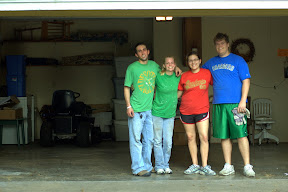
Their expressions say it all. We spent 20 hours of our weekend, cutting, cleaning, building, and repairing a family member's yard and house.
Ross and I built a new porch and hung new shutters:



Linds and Steph chopped down the jungle:



And we all worked to clean out the garage:

All in all, we filled 65 trash bags; trimmed 40 shrubs and 4 trees; clean out and organized 6 rooms and a garage; gave away 4 desks, 1 couch, 2 lamps, 5 chairs, 2 beds, 3 shelves, 30 books, 8 sets of sheets, 16 blankets, 1 chainsaw, 22 picture frames, 6 baskets, and 30 years of miscellaneous knick-knacks; hung 10 shutters; and built 1 porch.
Tuesday, March 18, 2008
dancing in beaumont

I shot my first dark indoor event this weekend. It was a learning experience. Mostly, I concentrated on lots of close shots of small groups and individuals...and some slower shutter shots on the dance floor.
Monday, March 10, 2008
left out

We spent the weekend @ the lakehouse in tyler. On Saturday, several of Linds' cousins showed up to celebrate my, and gpa Max's bdays. One of my favorite things to do out there is shoot baskets with the boys. Somehow, "big E" always ends up on the outside-looking-in...sometimes he gets his feelings hurt, but other times, I don't think he minds all that much. It's possible that he is instead, pondering the mysteries of the universe (or plotting revenge on his brothers).
Saturday, March 8, 2008
the co-existence of evil and the good God
Finishing Migliore's Faith Seeking Understanding and Grenz's Theology for the Community of God
The doctrine of a providential God has traditionally maintained that God provides, takes care of, supervises, enables, all things. If it has been understood that God is wholly good, and that He claimed his creation to be good, there is then conflict with the evil activity that is present in the world. This sin is experienced in two forms: natural evil, and malice. Natural evil refers to injury, suffering caused by diseases, accidents, earthquakes, tornados, fires, and floods, etc. Earthquakes and tornado are not in themselves evil, but when a person and tornado share identical location harm will result. Malice refers to evils preformed out of intentional or desired evil that involve moral or ethical judgments. Moral evil is a possible result when humans exercise their free will. If a person does not choose good, they choose against God; they choose evil.
Divine providence is less a speculative doctrine than a practical truth. Assuredly, there is a knowing and decided evil at work. Nevertheless, God reigns and evil is firmly under God’s control. Traditional theology has approached this quandary by several ideological methods. Many even choose to not attempt to explain how God can remain sovereign and good while the world is filled with evil. These, rest in the incomprehensibility of God; that all is a part of His providential plan, and that we should simply trust that God is good. Others have supposed that evil exist as the substance of divine punishment. This would include that both natural evil and malice are allowed, or even ordained by God, to punish the wickedness of mankind’s separation from the Creator. This concept would allow that humans today suffer both for the sins of Adam, as well as for their own individual sin. Other traditions hold a view of divine pedagogy that makes use of earthly suffering to turn us to God and to cultivate our hope for eternal life.
Migliore has described several serious modern concepts which have been rallied-around in explanation of the co-existence of God and evil. Some, having a very strong view of the sovereignty of God, have taken to a protest theodicy, believing that we are meant to struggle with the question of God’s goodness. It is necessary for people to engage themselves in the dilemma and honestly deal with “God is love”. The Bible presents several accounts of people genuinely seeking God’s provision in times of need. One such is the story of Jacob who was a man characterized by struggle. His struggle began while he was born clutching at his twin brother’s heel. When the time came, Jacob deceived his brother and his blind father and received the blessing of the first born. Fearing for his life, Jacob ran away from home for 20 years. A time came when Jacob was nearing a quarrel with his in-laws and so God instructed Jacob to return home. Jacob found himself stuck between possible danger with his in-laws and possible dangerous revenge from his own family. In his place of desperation and anxiety, he wrestled with God, begging for blessing (Genesis 31:1-33:11). In this experience he was faced with the realities of good and evil, and he would settle for nothing less than the good blessing of God. The key to Jacob’s experience and to the protest theodicy is to be faithful to God even when it might appear that God may not provide; and part of a faithful response to God is to protest evil.
Several modern scholars have instead supported a process theodicy, maintaining simply that God’s power is only expressed as persuasion, rather than coercion, thus He is limited and cannot prevent some evils. In this theory, God is indirectly responsible for evil because He creates forms of life that have the potential for evil. Though, God cannot be blamed because He intends good and He even shares in the suffering.
Out of the tradition of liberation theology has come a liberation theodicy which embraces redemptive suffering. There is “a call to courageous human participation in God’s struggle against suffering rather than a pious acquiescence in suffering.” Essentially believers are to cry-out as freedom fighters in a Christian war against sin.
I relate most, to the person-making theodicy. God desires “persons who freely render their worship and adoration. Hence, human beings are created incomplete and must freely participate in the process by which they come to be what God intends them to be.” There is biblical precedence for humanity's calling to submit ourselves to God; and this requires on our part, a full engagement of our physical, emotional, logical selves to our spiritual selves as we trust God, grow closer to Him relationally, and conform to His image. In this way we can begin to reach our full potential in Christ. I do though; agree with Migliore's description, in that the person-making theodicy is weakened by its lack of emphasis on resisting unnecessary suffering. In an extreme form, this type of ideology could lead people to actually seek out suffering, and in turn, could glorify suffering in itself. This is a pretty scary road if it is followed.
In essence, the reality of evil is the result of the freedom with which God endowed men. By giving mankind the freedom to choose him, God gave mankind the freedom to not choose him. God has said he is “The One forming light and creating darkness, causing well-being and creating calamity” (Isaiah 45:7). It is difficult for us to comprehend what is God’s place, and there may be many variations of explanation of how the Justice of God works out amidst the world’s sin. I tend to agree with those who understand God to be growing and shaping us to submit to Him more and trust Him more. In “Our quest for coherence, however, [we] must resist the temptation to build a system of ideas that pretends to know more than we do and thereby loses touch with both faith and lived reality. While we can have confidence in the truth of God revealed to us in Christ, our knowledge of God is not exhaustive” (Migliore). And so in some regard, I must simply trust that God is in control of all things, and that His goodness will be provided through the end of time. As well, I must engage myself in imitation and reflection of God’s good ways by being aware of evil and choosing to ask God for his provision of blessings, and by working against worldly evils as He give me strength. Through these efforts, I believe too, that God is working to conform me to the Imago Dei.
Friday, March 7, 2008
the effects of the Fall
I like what Stanley Grenz has to say about the effects of Adam’s sin. He surmises that through choosing to disobey God, Adam and Eve’s eyes were opened to the difference between good and evil. This created a break in the harmony in which they existed; which had been characterized by fellowship with God, community with each other, and living in accord with all other created things. Consequently, the first two of humanity introduced enmity that separates humankind from their Creator and from the rest of creation. Daniel Migliore defines this as evil, “which opposes the will of God and distorts the good creation.”
There could possibly be some spiritual-physiological aspect involved in the nature of human sin. Adam and Eve were created purely out of the power and creativity of God. Every human since then, has come about by an alternative experience. Without omitting God’s power in the process of reproduction, we all have been conceived and born out of the physiological substance of sinful humans. The first humans were derived only from God’s creativity and dust; since the fall, all others have come from cells. Though physiology may be only a theory, certainly, this break in community has culturally and spiritually been handed down since the fall. It has been taught by words and ideology, and by experiences, in such a way that we are essentially torn between the possibility of good and evil; and we continue to allow it to divide us. If God intended for us to exist in the unity of His image, the fall disfigured the human ability to live in such innocent harmony.
We are not punished by the actual event of Adam’s fall. Rather, his sin created the potential and inevitable future for us to imitate his sin; and we are punished for our participation in the break of God’s image. In this way, Adam’s fall represents all of humankind’s sin and guilt. What is for sure is that “the ills we experience do not arise from divine carelessness or impotence, but from a free and sinful human act” (Aquinas). Grenz suggests the possibility that in their innocence Adam and Eve had not had the opportunity to choose good (and God) over evil, and so they “did not yet fully participate in the human destiny as designed by God.” In this manner of reason, their sin has a two-fold effect; in that they both opened the door to discord, and to the opportunity to choose live in the harmonic image of God.
Thursday, March 6, 2008
the sin of humans and the providence of God
Tuesday, March 4, 2008
adam and eve-n me
I was once romanced by the concept of the symbolic fall account (that the Genesis 3 story was a myth to symblize the sinful experience of humanity), but I struggled to connect my own original experience with Adam’s. His story began in an unspoiled paradise, and I was born into a world of sin. If the fall was merely symbolism of every human experience, then somehow I missed my opportunity to try out a sinless culture. I agree with the construct of Donald Bloesch, in that “Adam is both actual and symbolic”. The Garden of Eden and the fall should be taken as historica and literal, and as the symbol and enablement of a sinful human tradition.
I like what Grenz has to say about the effects of Adam’s sin. He surmises that through choosing to disobey God, Adam and Eve’s eyes were opened to the difference between good and evil. This created a break in the harmony in which they existed; which had been characterized by fellowship with God, community with each other, and living in accord with all other created things. As consequence, the first two of humanity introduced enmity that separates humankind from their Creator and from the rest of creation. This separation has culturally and spiritually been handed down since the fall. It has been taught by words and ideology, and by experiences, in such a way that we are essentially torn between the possibility of good and evil; and we continue to allow it to divide us. If God intended us to exist in the unity of His image, the fall disfigured the human ability to live in such innocent harmony.
Grenz suggests the possibility that in their innocence Adam and Eve had not had the opportunity to choose good (and God) over evil, and so they “did not yet fully participate in the human destiny as designed by God.” In this manner of reason, their sin has a two-fold effect; in that they both opened the door to discord, and to the opportunity to choose live in the harmonic image of God.
We are not punished by the actual event of Adam’s fall. Rather, his sin created the potential and inevitable future for us to imitate his sin; and we are punished for our participation in the break of God’s image. In this way, Adam’s fall represents all of humankind’s sin and guilt.
Thursday, February 28, 2008
imago dei
Chosen format

I've decided to make this primarily a photoblog. This is the format it has taken on, and I like it. Several times, I have sat down to write an opinion or commentary blog, but the page remains blank. I may be overcome with a fear of bad blogging. I did start a side-blog...it's out there...and I'm writing. And I guess, that was the whole point of the Blog Revolution of '08 (right Chris? -brewingthoughtsblog).
Wednesday, February 27, 2008
boat in the family


There's a boat in the family now! Of course, the above picture isn't it (it's a toy boat in a pond). I am looking forward to warmer weather and afternoons on the lake. If you are nice I might try to sneak you aboard.
Sunday, February 24, 2008
some notes about God's providence and evil's existence
I really like the way that Migliore started this chapter:
“Our quest for coherence…must resist the temptation to build a system of ideas that pretends to know more than we do and thereby loses touch with both faith and lived reality. While we can have confidence in the truth of God revealed to us in Christ, our knowledge of God is not exhaustive.”
PROVIDENCE=God provides, takes care of, supervises, enables, all things
*There is a knowing and decided evil at work…what is God’s place.
*Natural evil refers to injury, suffering, caused by diseases, accidents, earthquakes, fires, and floods, etc.
Is mortality in itself evil?
--Augustine and Calvin: divine providence is less a speculative doctrine than a practical truth…God reigns and evil is firmly under God’s control.
Traditional Theology:
-incomprehensibility of God…just trust Him
-divine punishment
-divine pedagogy that makes use of earthly suffering to turn us to God and to cultivate our hope for eternal life
Modern alternative Theodices:
Protest Theodicy
Very strong view of the sovereignty of God that leads one to question God’s goodness…must honestly deal with “God is love”.
Ex:
-Jacob wrestles with God
-Psalmist “How Long”
-Job “I’m innocent”
-Jesus cries out to God from the cross
Answer:
-to be faithful to God even when might appear that God has ceased to be faithful…part of a faithful response to God is to protest evil.
Process Theodicy
God’s power is only expressed as persuasion, rather than coercion, thus He is limited and cannot prevent some evils. God is indirectly responsible for evil because He creates forms of life that have the potential for evil. God cannot be blamed because He intends good and shares in the suffering.
Weakness:
That Good will win
Person-making Theodicy
God desires persons who freely render their worship and adoration. Hence, human beings are created incomplete and must freely participate in the process by which they come to be what God intends them to be.
??”existence of worlds beyond this world in which persons continue their movement toward the fullness of life in love that God intends for all creatures”??
-spiritual worlds??, continued growth through eternity in heaven??
-Focuses on growth through suffering…not enough on resistance to suffering (every form and occurrence of suffering is an opportunity for spiritual development)
-Heb. 5:8 “learned obedience through what he suffered”
Liberation Theodicy
Redemptive suffering. A call to courageous human participation in God’s struggle against suffering rather than a pious acquiescence in suffering.
I relate most, to the person-making theodicy. I do see biblical precedence for humanity's calling to submit ourselves to God...this requires on our part, a full engagement of our physical, emotional, logical selves to our spiritual selves as we trust God, grow closer to Him relationally, and conform to His image. In this way we can begin to reach our full potential in Christ. I do though, agree with Migliore's description, in that the person-making theodicy is weakened by its lack of emphasis on resisting unnecessary suffering. In an extreme form, this type of ideology could lead people to actually seek out suffering, and in turn, could glorify suffering in itself. This is a pretty scary road if it is followed.
Thursday, February 21, 2008
what about the Trinity's involvement in creation?
The formation and generation analogies compliment the abovementioned models. Formation should refer to God’s work of sustaining creation, and His work of redemptive recreation. The Generation model depicts a human, cultural, and even personal understanding of the way God engages His creation. As God emanates His character through creative activity, He cares for, and provides for the needs of His creation. This is an outpouring of His love and power, and it coincides with the concept of God forming His creation for His glory.
I do not prefer the concept of the mind/body relationship. While it does help to portray a unity the God desires for His creation to have with Him, it otherwise is allows for some weaknesses. This model would seem to level the creation with the Creator. The mind and body are co-dependent on each other in many ways. It would be incorrect to infer that God is dependent upon His creation.
Grenz asserts that creation is the work of the full Trinity. In some places it seems that Grenz is depersonalizing the HS ("The dynamic that binds the Father and the Son – the power of their relationship-is the HS") ("the Spirit is the personal power of God- the dynamic of love between the Father and the Son – by means of which all things exist"). These examples cast a picture of the HS as being power through which God works...as opposed to being powerful (which would be an attribute, and description of action of the person of the HS). I don't know if I am describing what I mean well or not...Grenz makes the HS seem to be only the adjective of the Father, rather than it's own noun. Though, the final two sentences of this section in the book could be looked at as contradiction for the purpose of this discussion.
"the HS is the 'one' (seems to have a sense of individuality) through whom the Father, the direct agent in creation, fashions the world."
vs.
"the HS is the personal power of God" (the strength in which God works).
While the distinctive roles he describes do make logical and spiritual sense, I think that more value can be found when we focus on the unified way in which the Trinity completes creation. I do not mean to say that the value is only in the oneness. In any subject, it seems to help understand a concept when we look at its smallest denominators. By dissecting "God Creates" into "The Father, the Son, and the HS create" we can better comprehend HOW the Trinity is one. I think that there is value in looking at the distinctions; but they should not separate God's persons...they should reveal their unification, and the unified way in which the Trinity completes creation. Holistically, the Trinity called all things into existence, laid purpose for all things, and is at work sustaining and leading creation to respond to the Creator. This ways in which the Trinity completes Divine experience (even in creation) helps me believe in God and in His sovereignty. Faith in the completeness of a Trinitarian God who creates out of His own nature provides that there is purpose in an orderly creation, and that all of His creation is inherently good. For me, the cohesion of the Trinity accentuates how He has put all things into proper order, and all things are created to express His glory.
Monday, February 18, 2008
is God a dude or a chick?
Saturday, February 16, 2008
more thoughts on the social God
Friday, February 15, 2008
the social God
Wednesday, February 13, 2008
inerrancy
some notes on inspiration and inerrancy
Some traditional views of inspiration:
Humanistic Views of Inspiration - Scripture contains the noble insights of great people of faith.
Dictation Theory of Inspiration - Human writers were only instruments or stenographers through which God spoke his message
Dynamic View of Inspiration - God inspired great people of faith to write his message. He inspired through thought, rather than word for word. Writers wrote down God's message within the parameters of their own language and worldview.
Plenary Verbal View of Inspiration - The very words themselves are inspired.
And about innerrancy:
Propositional Inerrancy - also called "Blunt Inerrancy," "Strict Inerrancy," or "Absolute Inerrancy. Every word of the Bible is propositional truth, including those relating to science, history, etc.
Pietistic Inerrancy - also called "Fideistic," "Naive," or "Spontaneous" Inerrancy; or "Biblicism." A non-critical approach that assumes all statements in the Bible are true.
Nuanced Inerrancy - View of inerrancy depends on the genre of biblical literature. Some portions of Scripture were dictated verbatim, e.g., Ten Commandments. Epistles and historical portions have verbal inspiration. Material like Proverbs requires a more liberal understanding of exactness.
Critical Inerrancy - Holds that each word of Scripture is as God would have it. However, it allows for a number of qualifications, e.g., rounding off of numbers, cosmology, scientific references, inaccuracy in quotations, etc.
Functional Inerrancy - also called "Limited Inerrancy" or "Infallibility." The Bible is inerrant when it speaks of matters of faith and ethics, but not necessarily in matters of science or history. It speaks of the Bible in terms of truthfulness and faithfulness. The Bible may contain an error in history or science that was not available to the writer. However, these "errors" in no way effect a truthful teaching about faith or behavior.